• About The Tuesday Swim

the tuesday swim…

the tuesday swim…

Category Archives: The Lea Valley

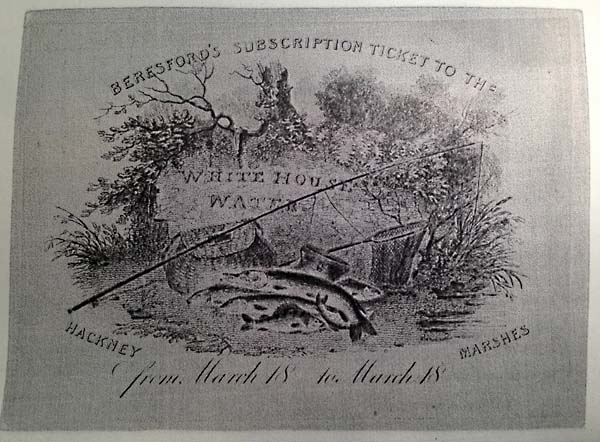
The White House ticket for Hackney Marshes.

06 Wednesday Feb 2013

Posted by The tuesday swim in The Lea Valley

≈ Leave a comment

Tags

beresford, fishing, hackney, horse, house, marshes, mrs, public, station, the, White

White house Hackney Marshes

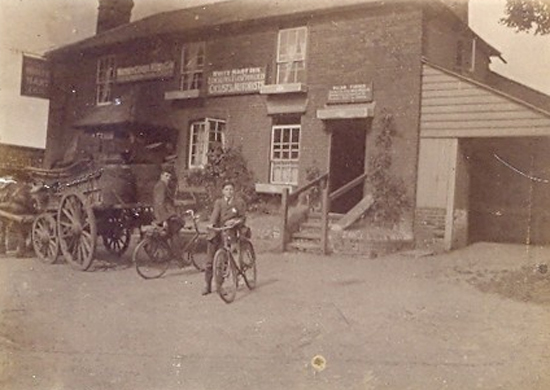
Last year I wrote about the White House public house that stood alone in the Hackney Marshes near the end of Pond Lane. Run by Mrs Beresford this was one of the prime tickets to hold on the Lower Lea. Today the tuesday swim had the privilege to hold one of these hundred year old subscriptions, issued by Mrs Beresford.

White House Ticket

Walthamstow, Leyton & Hackney marshes in winter.

18 Friday Jan 2013

Posted by The tuesday swim in The Lea Valley

≈ 3 Comments

Tags

east, hackney, hawks, leyton, london, marshes, snow, sparrow, walthamstow, winter

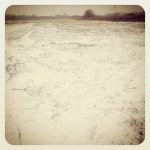
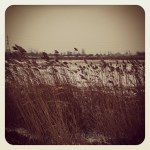
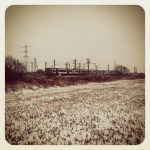
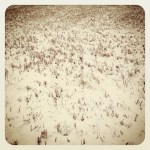
When the snow comes the aesthetic change is quite obvious, where as the acoustic change is more subtle and this brings a stillness to the landscape. My walk today on the marshes was a wonderful duo-tone of colour and was only broken twice, once by the flash of orange from a passing fox and nearing my journey’s end the shrill of two sparrow hawks seeing off a rather brave but very large crow.

Leyton Marshes
Leyton Marshes
Leyton Marshes

Leyton Marshes
Leyton Marshes
Walthamstow Marshes

Walthamstow marshes
Walthamstow marshes
Walthamstow marshes

Leyton Marshes
Walthamstow Marshes
River Lea

Leyton Marshes
Hackney Marshes
Middlesex Filter Beds

Middlesex Filter Beds
Hackney Marshes

Hackney marshes, a brief Victorian history & its fishing stations.

15 Monday Oct 2012

Posted by The tuesday swim in The Lea Valley

≈ 2 Comments

Tags

fishing, groom, hackney, hart, history, horse, house, inn, marshes, pub, victotian, White

I’m now lucky enough to live close to the Hackney Marshes, a ten minute stroll takes me through Millfields Park, across the Lea Navigation, through the Middlesex Filter Beds and then onto a large expanse of football pitches, known as the Hackney Marshes. At first site this could look like any municipal area created for Britain’s second most popular participants sport, football but around the outskirts of these pitches lie many interesting natural features along with tales of past goings on, many of a dark and sinister nature. The marsh had been left untouched subject to Lammas rights (land split up into strips and used for producing hay and used only for grazing) hence why no building development had gone ahead in this area.

But in 1893 Sir John Hutton, the chairman of the London County Council dedicated the marshes to be an open space for the people of London after mounting pressure from various public groups including the Rev E K Douglass who ran the Eton Mission at Hackney Wick. Rev Douglass pointed out that the lads football club connected with the Mission has been ordered off the marshes by Drivers who had proceeded to carry off their goal posts! With growing pressure a final sum of £75,000 pounds was paid to the Lord and the commoners who had rights to the land by Hackney Council, giving the land back to the people of the borough for recreational use.

At that time the following extract from a pamphlet set out by the London Parks Committee describes the marsh as “a large area of flat meadow land, lying on the eastern boundary of London and intersected and skirted by the river Lea and its tributaries. It is 387 acres in extent, and three and a half miles from the Royal Exchange.” With this new aquisition, the council was about to change the marshes for ever but for many this was not for the better as the marshes represented a real rural idyl with the central marshes still having a sense of the wilderness about it especially when approached via surrounding villages like Clapton, Hommerton, Leyton and Hackney Wick. One such fondly remembered inhabitant lived on the outskirts of the marsh, there lay a ramshackle building where its occupants would greet passers by, by selling ginger beer and sorry looking cakes together with fish caught from the Navigation Cut laid out in dishes. Unsucessfull anglers could fill their creels with fish on return from the Lea enabling them to feed their families and keep their sense of personal pride. This wild almost anarchic  area was starting to loose its dark reputation as the Lea’s tributaries were drained and access became less of a challenge as one could now wander off the designated paths. The Lea itself was now controlled by new higher banks and flood relief channels, the marsh was now in name and not in nature.

Romany gypsies camped out on the marshes in the late nineteenth century.

The Lea of old held large fish, pike of 25 lbs, trout 11 1/2 lbs, barbel 13 1/2 lbs,  chub 7 1/2 lbs, carp 11lbs, bream 5 3/4 lbs and ells of  6 3/4 lbs. One of the principle spots to catch these monsters was around the White House fishery boasting 150 subscribers each year. The White House pub stood alone in the middle of the marshes run  in the late 19th century by widower Mrs Beresford and her sons. Mrs Beresford reputation as a courteous hostess became well known to the Walton desciples that descended onto the Lea who took sanctuary in the pub with its walls adorned with stuffed birds aquired by Mrs Beresfords late husband George a keen hunter and fisherman. In earlier days the inn was frequently visited by Dick Turpin and other like minded types who felt save in the refuge of the marshes, knowing that only the bravest of law enforcers would venture into this wild area. The inn finally fell silent in 1917 when no interest was taken in the license and so it was demolished.

The White House Inn, Hackney Marshes.

Another notable fishing Inn was the Horse and Groom on the Lea Bridge Road and at the opposite end of Hackney marshes the White Hart Inn by Temple Mills the last point where the river Lea is tidal.

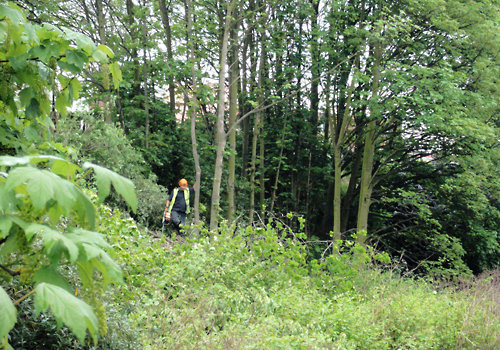
The White Hart Inn, Temple Mills.The marshes are now fully tamed, dotted by endless rugby and goal posts. In the background (above) behind the row of trees lies the river Lea still frequented by a few anglers and indeed the Tuesday Swim. Behind me lies the Lea Navigation where large carp reside, yes the canal carp are still on the Tuesday Swims radar but that will be next year. The marshes have survived the Olympics tidying up policy and still retain a  real sense of the  past with the old Victorian engineering in the Middlesex Filter Beds and the meanders of the old Lea, stubborn in its path. There is still a lot more to explore in this area and I shall come back to it here at the Tuesday Swim.

The Olympic Site 2005.

27 Friday Jul 2012

Posted by The tuesday swim in The Lea Valley

≈ 2 Comments

Tags

2012, back, bow, east, hackney, london, olympic, waters, wick

Today the 2012 London Olympics open in East London, seven years ago I witnessed one of the first workers entering the site armed with a chain saw. The Bow Back Waters were netted and the residing fish were put in the near by Lea Navigation.

For my previous piece on the lost Bow Back Waters see here.

The Bow Back Waters…remembered.

28 Wednesday Sep 2011

Posted by The tuesday swim in The Lea Valley

≈ 3 Comments

Tags

alfred, back, bow, east, ford, great, history, lea, lock, mill, old, olympic, pudding, river, stream, waters

On the 6th July 2005 a hopeful crowd gathered in Trafalgar Square to hear the winning bid for the 2012 Olympic venue. At 12.49 BST, Jacques Rogge, president of the International Olympic committee announced that London would be the host.

Meanwhile back in the area known as Fish Island and beyond, in the East End, a sleepy forgotten patch of post industrial land lay quiet and untouched, a lone dog walker, jogger, cyclist or on some occasions an angler would pass through this quiet oasis, known as The Bow Back waters.

To explain the Bow Back Waters, where it’s borders start and finish is not easily defined and even after spending a few years wandering the network of flood relief channels, navigable canals and natural brooks, the footprint is ambiguous but I would say looking at a map, north of Three Mills to Old Ford Lock marks this area.

The history.

The Bow Back Waters originally called Stratford Marsh goes back to pre-history but in Roman times there was evidence of occupation here especially at the Ford Bridge which crossed the river Lea at low tide and allowed a passage to Colchester.

Throughout the next 2000 years the River Lea’s path has been diverted, blocked and widened. Alfred the Great drained the river at Leamouth to halt the advance of the Danes and prevent an invasion from the River Thames. By the eighteenth century industrialisation was taking place and many wharfs were created to accommodate the import of timber, chalk, stone, coal, and wheat. By 1821, the earliest proper dock named Stratford Dock, later called Meggs Dock was created just up from Bow Bridge but after 1920, the whole site had been filled in and was occupied by factories and workshops that didn’t depend on water access. Now the majority of these factories have been demolished for the new Olympic site.
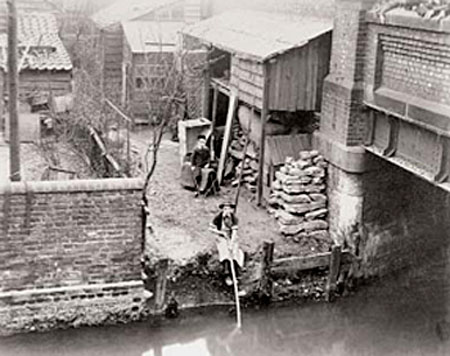
Somewhere on the Bow Back Waters around 1900 (above).

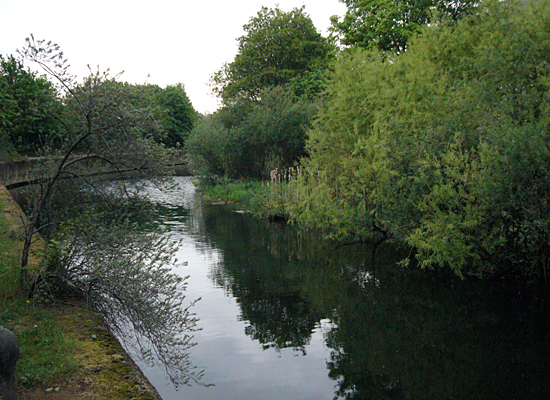
The images below were taken around 2007…
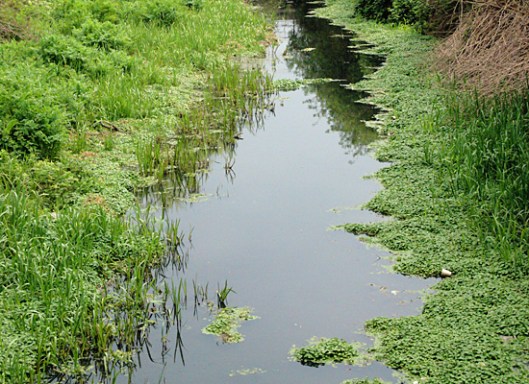
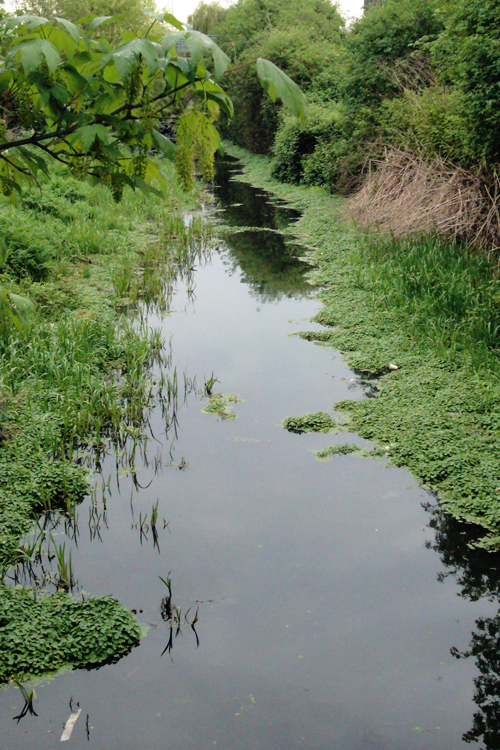
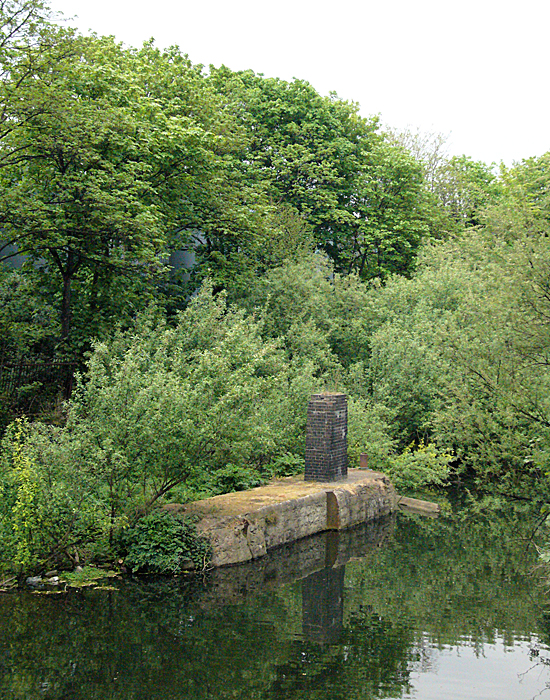
Pudding Mill stream (above).

To the left of this image is the new olympics stadium (above).
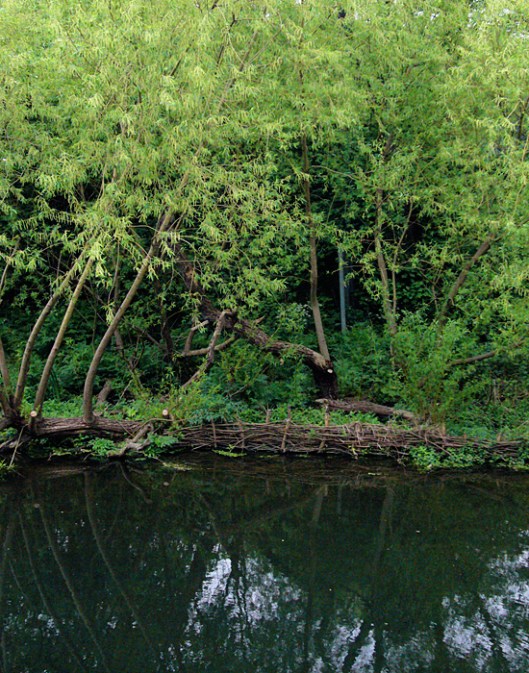
Some local conservation work to preserve the banks of the Bow Back Waters and create nesting areas for waterfowl (above).
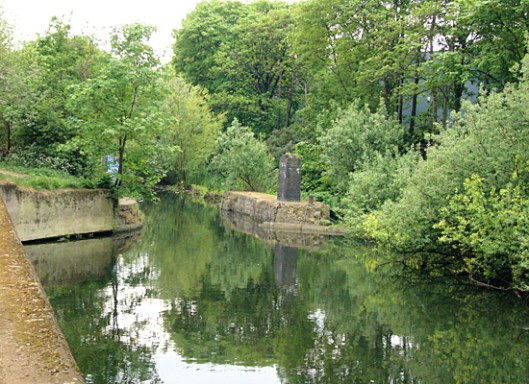
Remainders of a more industrial time (above and below).
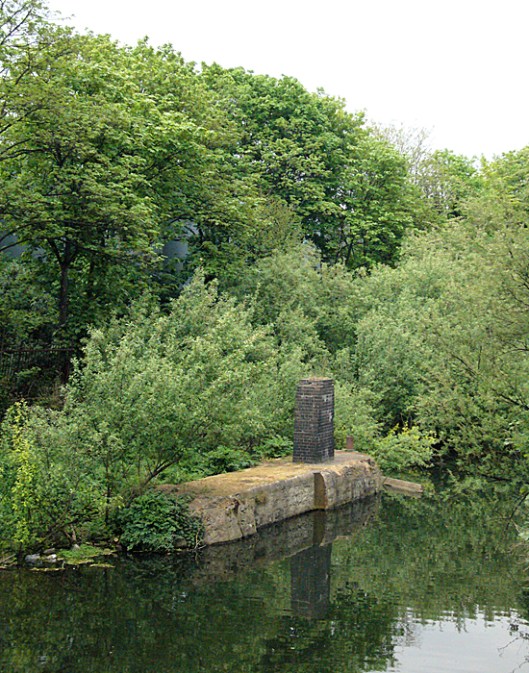
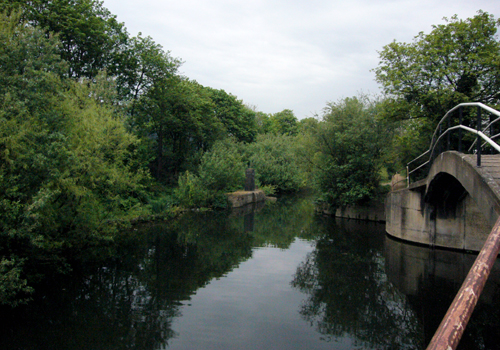
Carp and bream were often found cruising along this stretch which still exists, up ahead is Old Ford Lock (above).

Shortly after the olympic announcement the Bow Back Waters were electro-netted and the carp, bream along with pike and plenty of silver fish were removed and put into the Lea Navigation, I believe Pudding Mill stream was completely dug out and filled in.

Three months ago I was invited onto the Olympic site and saw the work done on the original River Lea, which had been widened to take industrial barges containing the new steel for the Olympic build. The work was sympathetic but also heavily landscaped, now banks of wild flowers and regimented forests of silver birch will greet the excited sports fans. The Lea of old has lost its real wild and neglected appeal.

From my window the Olympic stadium stands just a quarter of a mile away, now a permanent feature. I am in favour of the Olympics and the Olympic park but I do sometimes miss that quiet hidden corner of East London, spending an hour casting a floating crust for the Channel Relief carp. On occasion I did hook the odd carp but never actually managed to get one on the bank, frustrating and now, never to be repeated.

Sloes on the Lea…

29 Monday Aug 2011

Posted by The tuesday swim in The Lea Valley

≈ Leave a comment

Tags

gin, homemade, recipe, sloe

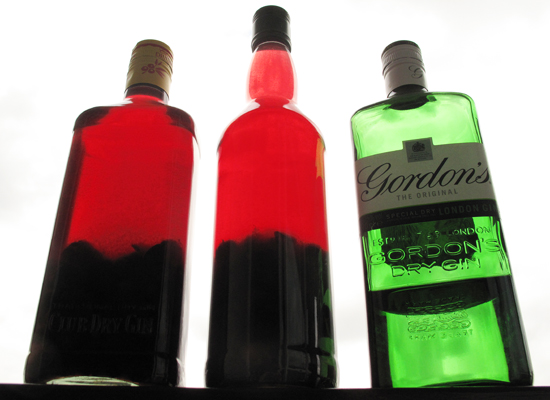
My friend and canal boat dweller, Caroline passed on some sloes found on the Lea Navigation tow path. To celebrate the start of autumn and one of my favourite fishing seasons, sloe gin has been produced at The Tuesday Swim.

The recipe is easy.

Two bottles of cheap London Gin (Lidl is recommended).

About half a pound of sloes.

300 grams of caster sugar.

Wash the sloes, dry them, prick them and then add to the gin. Some gin will have to be removed to take the sloes, so a final G&T or three can be had to say farewell  to the summer. Then add the sugar, you can always add more sugar later on, to taste. Shake the bottle every few days to distribute the flavour and breakdown the sloes.

In three months time after a cold days piking, a glass of slow gin will be the perfect warming remedy.

Newer posts →

Read about

  • Barbel
  • Carp
  • Fallon's Angler quarterly
  • General
  • General fishing
  • Music
  • Photography and video
  • Pike
  • Product reviews
  • Reading
  • Tackle
  • The Lea Valley

Blog at WordPress.com.

Privacy & Cookies: This site uses cookies. By continuing to use this website, you agree to their use.
To find out more, including how to control cookies, see here: Cookie Policy
  • Subscribe Subscribed
    • the tuesday swim...
    • Join 202 other subscribers
    • Already have a WordPress.com account? Log in now.
    • the tuesday swim...
    • Subscribe Subscribed
    • Sign up
    • Log in
    • Report this content
    • View site in Reader
    • Manage subscriptions
    • Collapse this bar
 

Loading Comments...